Plantar fasciitis can make every morning step feel like a sharp stone under the heel. Shock wave therapy is often presented as a modern solution, yet outcomes vary between patients, devices, and treatment protocols. So, what is the success rate of shock wave therapy for plantar fasciitis? The honest answer depends on how “success” is measured. Some studies use at least 50% pain reduction, while others measure walking ability, pressure sensitivity, or long-term symptom relief.
Clinical guidance from the American Physical Therapy Association’s Academy of Orthopaedic Physical Therapy highlights extracorporeal shock wave therapy as a possible option for persistent plantar heel pain. However, it should support a broader plan involving load management, calf stretching, and progressive strengthening. Evidence reviews published in peer-reviewed orthopedic and rehabilitation journals generally report meaningful pain improvement, but they also describe inconsistent results and differences in energy settings. The International Society for Medical Shockwave Treatment recommends careful diagnosis, appropriate dosing, and trained clinical supervision.
The details matter.
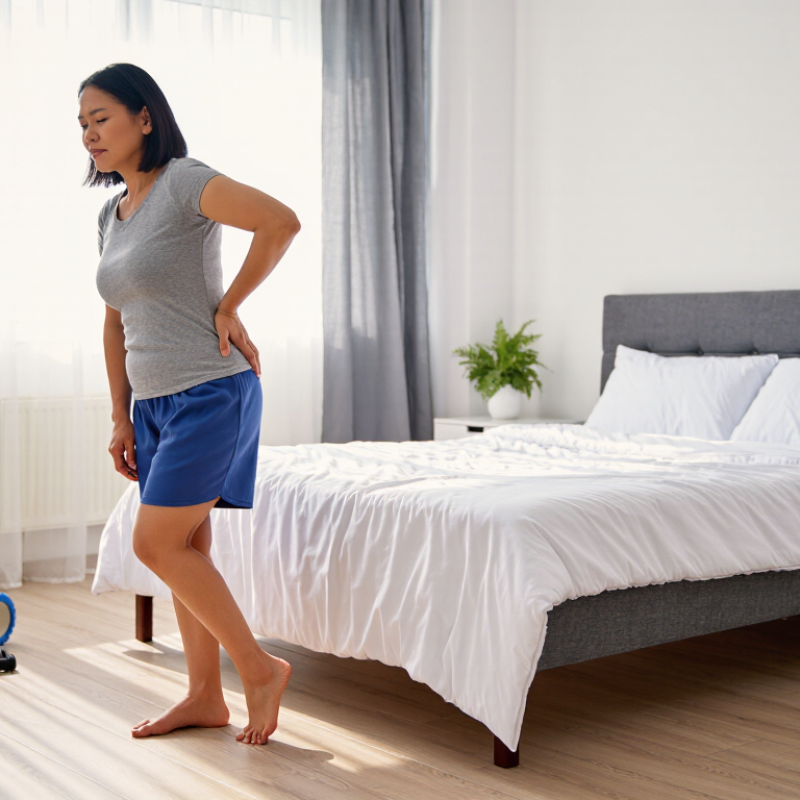
A patient standing beside the bed may notice improvement after several sessions, while another may experience temporary soreness before progress begins. Treatment is not guaranteed, and some research has limitations, including small samples and inconsistent follow-up periods. This article introduces five practical tips for improving treatment expectations, selecting qualified care, and judging results more realistically. It also questions impressive success claims, because a percentage without context can mislead patients and clinicians.
Shock wave therapy uses focused or radial sound waves around the painful plantar fascia. It does not “break up” a heel spur. Instead, the mechanical pulses may improve local circulation, reduce pain sensitivity, and support tissue remodeling. The response is usually gradual, not instant. A 2023 systematic review in the Journal of Orthopaedic Surgery and Research found meaningful improvements in pain and function, but treatment settings and follow-up periods varied widely. That makes a single success rate unreliable.
Tip: Confirm the diagnosis first. Heel pain can also come from nerve irritation, stress injury, or fat-pad problems. A clinician should check your walking pattern, calf tightness, and tenderness near the fascia. Treatment often uses three to five sessions, spaced about one week apart. Published trials commonly report improvement in about 50% to 80% of patients, although definitions of “success” differ. Pain relief is not the same as complete healing.
Tip: Pair therapy with simple loading work. Calf stretches, plantar-fascia stretches, supportive footwear, and gradual activity changes may improve results. The 2023 American College of Foot and Ankle Surgeons consensus describes shock wave therapy as a reasonable option after conservative care has not worked. Still, evidence remains uneven. Some patients improve slowly. Others feel little change. That uncertainty deserves honest discussion before treatment.
A “success rate” for shock wave therapy is not one fixed number. Researchers must define success before treatment begins. Some studies measure a meaningful drop in heel pain, often using a numerical rating scale. Others measure walking distance, morning comfort, or the ability to stand longer. Small changes may feel important to one patient but not another.
Clinicians often record pain during the first steps after waking. They may also use validated foot-function questionnaires and simple movement tests. Follow-up timing matters. A result at four weeks can differ from one at three months. Treatment studies should report the number of participants who completed each visit. Otherwise, the rate may look better than it really is.
Reliable research compares treatment groups and describes previous symptoms, activity levels, and other care received. It should report both improvement and side effects. Patient expectations can influence pain scores, even when tissue healing is uncertain. That is a limitation worth acknowledging. Some studies also use different energy settings, treatment schedules, and definitions of “success.” Comparing their percentages directly can therefore mislead readers.
A practical assessment combines several signs: less morning pain, better walking tolerance, improved function, and sustained benefit. One measurement is rarely enough. Recovery is uneven. Fever, numbness, or worsening pain deserves prompt medical assessment.
Shock wave therapy can help plantar fasciitis, but its success rate is not fixed. Recent systematic reviews report meaningful pain improvement in roughly 60% to 80% of treated patients. Results vary because studies use different definitions of “success.” Some measure heel pain, while others measure walking distance or morning stiffness.
The first factor is diagnosis. Heel pain may involve plantar fascia damage, nerve irritation, or bone stress. The second is symptom duration. Long-standing cases often need more sessions and slower expectations.
Treatment settings also matter. Energy level, pulse frequency, and session intervals should match the patient’s tolerance and tissue condition. More energy is not automatically better.
Patient factors influence outcomes too. Body weight, calf tightness, diabetes, sleep quality, and daily standing hours can affect recovery. Rehabilitation is another variable. Gentle calf stretching, load management, and supportive footwear may improve results. A 2024 review in Journal of Clinical Medicine found that combined care often produced more consistent functional gains than isolated treatment. Follow-up timing matters as well. Many studies assess outcomes after 8 to 12 weeks, not immediately after treatment.
The evidence is useful, but imperfect. Research protocols differ widely. My practical concern is simple: pain relief alone can hide poor function. Clinicians should track morning pain, walking tolerance, and weekly activity. A patient who still avoids stairs may not be a true treatment success.
Shock Wave Therapy Success Rate for Plantar Fasciitis: What the Clinical Evidence Shows About Effectiveness
Clinical evidence suggests that extracorporeal shock wave therapy can reduce plantar heel pain, especially after conservative care fails. Meta-analyses published in the Journal of Clinical Medicine and the Journal of Foot and Ankle Research report meaningful improvement in roughly 50% to 80% of treated patients. However, success rates change with the definition used. Pain reduction is not the same as complete recovery. The evidence is useful, but not perfectly clean.
Tip 1: Check the diagnosis first. Plantar fasciitis can resemble nerve irritation, stress injury, or heel-pad pain. A physical examination should guide treatment. In clinical trials, protocols commonly use three to five sessions, spaced about one week apart. Patients may feel brief tapping pain, redness, or tenderness afterward. Improvement often appears gradually over several weeks, not overnight.
Tip 2: Track function, not pain alone. Record morning steps, walking distance, and pain after standing. A 2024 review in the International Journal of Sports Physical Therapy found that treatment outcomes varied with energy settings, treatment sites, and follow-up periods. That variation matters. It makes a single “success rate” difficult to trust. Personally, I would question any claim promising guaranteed relief. Results may be weaker when symptoms are longstanding, body weight is high, or daily loading continues unchanged.
Shock wave therapy can improve symptoms in some people with chronic plantar fasciitis, but outcomes vary according to diagnosis, treatment protocol, symptom duration, and follow-up care.
In a multicenter randomized controlled trial of chronic, treatment-resistant plantar fasciitis, treatment success at 12 weeks was reported in 68.5% of participants receiving radial extracorporeal shock wave therapy compared with 34.1% receiving sham treatment. These results suggest a clinically meaningful benefit, while also showing that improvement can occur without active treatment.
Clinical evidence source: Gerdesmeyer L et al. “Radial extracorporeal shock wave therapy is safe and effective in the treatment of chronic recalcitrant plantar fasciitis.” American Journal of Sports Medicine, 2008;36(11):2100–2109. Success was defined using the study’s combined pain and function criteria at 12 weeks. Results may not apply to every patient or treatment protocol.
5 Tips Shock Wave Therapy Success Rate for Plantar Fasciitis?
How to Improve the Chances of Treatment Success
Tip 1: Confirm the diagnosis before treatment. Heel pain can come from nerve irritation, stress injury, or tendon problems. A qualified clinician should review your symptoms, walking pattern, and medical history. Shock wave therapy cannot correct the wrong diagnosis. That sounds obvious, but it is often overlooked.
Tip 2: Follow the complete treatment plan. Most patients need several sessions, not one dramatic appointment. Keep scheduled visits and report changes honestly. Mild soreness may occur after treatment, while severe or lasting pain deserves medical review. Do not judge success too early; tissue recovery can take several weeks.
Tip 3: Support the treatment between sessions. Wear supportive shoes with stable cushioning, especially on hard floors. Ask your clinician about calf stretching and gradual strengthening. Avoid suddenly increasing running, standing, or jumping. Small daily choices matter. I have seen patients expect the machine to do everything, and that expectation can slow progress.
Tip 4: Set realistic goals with your provider. Pain reduction, easier morning steps, and longer walking may improve at different speeds. Research shows varied outcomes, partly because patients have different symptoms and treatment settings. Existing conditions, weight, activity demands, and symptom duration may influence results. Keep a simple pain diary, but remember that one bad morning does not prove treatment failure.
| Tip | What to Do | Practical Target | Why It May Improve Success | Evidence-Based Perspective |
|---|---|---|---|---|
| 1 Confirm the Diagnosis | Have a qualified clinician confirm plantar fasciitis and assess other possible causes of heel pain, such as stress injury, nerve irritation, heel-pad problems, or inflammatory arthritis. | Treatment should be based on a consistent history, physical examination, and imaging only when the presentation is atypical or does not improve as expected. | Shock wave therapy is less likely to help when the pain source is not the plantar fascia. Accurate diagnosis prevents unsuitable treatment and delays in appropriate care. | Plantar fasciitis is usually diagnosed clinically. Imaging is not routinely required at the first visit when symptoms and examination findings are typical. |
| 2 Use an Appropriate Treatment Course | Follow the clinician’s prescribed energy level, treatment area, and session schedule rather than judging the therapy after one visit. | Many clinical protocols use approximately 3–5 sessions, commonly spaced about one week apart, although the optimal protocol varies by device, severity, and treatment type. | Benefits often develop gradually. Completing the planned course gives the tissue and nervous system time to respond and allows treatment parameters to be adjusted safely. | Research protocols differ substantially between focused and radial shock wave therapy, so a single universal success rate or session schedule cannot be applied to every patient. |
| 3 Combine Therapy With Stretching and Strengthening | Add a progressive program involving plantar-fascia-specific stretching, calf stretching, and strengthening of the foot and lower leg when clinically appropriate. | Perform the prescribed exercises consistently for at least 6–12 weeks, while increasing activity gradually and avoiding sudden training spikes. | Exercise can improve calf and foot flexibility, load tolerance, and lower-limb function. It also addresses mechanical factors that may continue to stress the plantar fascia. | Stretching and strengthening are commonly recommended conservative treatments. Combining rehabilitation with shock wave therapy may provide broader symptom and function support than relying on passive treatment alone. |
| 4 Manage Daily Load and Footwear | Temporarily reduce high-impact activity, avoid prolonged barefoot standing on hard surfaces, and use supportive, comfortable footwear. Increase walking or sport gradually as symptoms settle. | Keep activity at a level that does not cause a substantial increase in pain during the following morning; use a gradual return-to-activity plan. | Repeated overload can counteract symptom improvement. Controlling load may reduce irritation while the plantar fascia adapts to treatment and rehabilitation. | Activity modification and appropriate footwear are standard components of conservative plantar-fasciitis management, although no single shoe or insert works for every patient. |
| 5 Track Progress With Realistic Expectations | Record morning pain, walking tolerance, and activity level at baseline and during follow-up. Discuss persistent or worsening symptoms with the treating clinician. | A reduction of about 30% in pain is often considered a clinically meaningful improvement, while a reduction of about 50% represents a substantial improvement for many pain studies. | Shock wave therapy commonly produces delayed improvement rather than immediate pain relief. Objective tracking helps distinguish gradual recovery from treatment failure. | Published studies report widely varying outcomes, often roughly 50%–80% improvement, because success definitions, follow-up periods, patient severity, and treatment protocols differ. These figures are study ranges, not a personal guarantee. |
Important: Shock wave therapy should be selected and delivered by an appropriately qualified healthcare professional. Results vary by diagnosis, symptom duration, activity demands, treatment protocol, and adherence to rehabilitation. Seek medical review for severe swelling, numbness, inability to bear weight, fever, sudden injury, or symptoms that continue to worsen.
It uses focused or radial sound waves around the painful plantar fascia. The pulses may support circulation and tissue remodeling.
No. It does not break up the spur. Pain may improve even when the spur remains visible.
Studies report improvement in roughly 50% to 80% of patients. Results vary because researchers define success differently.
Many treatment plans use three to five sessions. Sessions are often spaced about one week apart.
Improvement is usually gradual. Many studies check results after eight to twelve weeks, not immediately.
Heel pain can involve nerve irritation, bone stress, or fat-pad problems. Treatment may miss the cause otherwise.
Symptom duration, body weight, calf tightness, diabetes, sleep, and standing hours may influence recovery. More energy is not always better.
Gentle calf stretching, plantar-fascia stretching, supportive shoes, and gradual activity changes may help. Small changes matter.
It may be reasonable after conservative care fails. A clinician should discuss tolerance, function, and realistic expectations before treatment.
Track morning pain, walking distance, stair use, and weekly activity. Less pain alone may hide poor function.
Shock wave therapy is a non-invasive treatment that uses acoustic energy to stimulate the plantar fascia and surrounding tissues, helping reduce pain and support the body’s natural healing process. But what is the success rate of shock wave therapy for plantar fasciitis? Results can vary, and success is usually measured by reduced pain, improved walking ability, better daily function, and lasting relief over time rather than by one simple percentage.
Treatment outcomes are influenced by factors such as symptom duration, the severity of the condition, treatment frequency, correct energy settings, and the patient’s overall health. Clinical evidence generally suggests that many patients experience meaningful improvement, although results are not guaranteed. To improve the chances of success, patients should follow the recommended treatment plan, wear supportive footwear, stretch the calf and plantar fascia, manage activity levels, maintain a healthy weight, and address contributing biomechanical issues. Consistent follow-up is also important for evaluating progress and adjusting care when necessary.

Yiki Beauty